[ About Us | Popular | Marcom | AdNet | IChannel | Glossary ]
Showing posts with label brand. Show all posts

Feb 18, 2009

STATS Restaurant Industry Mostly Stable in 2008, Dips in Q4

The restaurant industry remained stable for most of 2008, with visits and dollars up over the previous year, but traffic dipped in the fourth quarter, yielding the industry’s slowest traffic and dollar growth since the recession of 2002-2003, according to The NPD Group (via Retailer Daily).

npd-restaurant-industry-traffic-yoy-growth-2003-2008.jpg

Foodservice traffic advanced 0.2% year over year in the 12 months ended November 2008, and consumer spending grew 2%, according to NPD’s Consumer Reports on Eating Share Trends (CREST), which tracks consumer usage of commercial foodservice.

Visits to quick-service restaurants (QSR) and deal promotions bolstered the industry, NPDfound.

“Despite this past year’s extremely weak economic conditions, the restaurant industry as a whole managed to keep its head above water for most of the year,” said Harry Balzer, chief industry analyst and VP, and author of Eating Patterns in America.

“Strong promotional activity on the part of chains, and growth in breakfast and lunch visits to quick-service restaurants, contributed to the slight gains the industry experienced this past year.”

Promotion-related visits supported all commercial foodservice gains, as deal visits increased 6% and non-deal visits slipped by 1%, according to NPD.

For the annual period ending November 2008, 23% of all traffic involved some type of consumer-recognized deal. Over 90% of the increase in deal visits came from QSRs.

While QSR traffic growth slowed in 2008, the segment fared better than full-service restaurants. The modest growth at QSR offset losses at midscale restaurants. Deal-related traffic kept QSRs in a positive position. Casual dining traffic was stable for the year; however, trends weakened n the latter half of the year with a 2% decline in traffic for the fall quarter.

As consumers took advantage of discounts at lunch, lunch traffic increased after realizing no growth in 2007. However, visits to restaurants for supper continued to trend down. Morning meal and snack-related occasions slowed over the previous years’ growth, but did experience positive growth in 2008.

“There will be no recession in eating; there will just be winners and losers. The restaurants that deliver value and make it easy to get food cheaper, in new and compelling ways, will win,” said Balzer, who has been observing how American eat for 30 years.

The number of restaurants opening was balanced out by the number of restaurants closing, resulting in no growth in total restaurant units in 2008, according to NPD .

Nov 25, 2008

Why the Four C's of Community Require the Commitment of Many

Ed: Microsites for brands.

Why the Four C's of Community Require the Commitment of Many

Let Content, Context, Connectivity and Continuity Guide Your Efforts

Have you ever given serious thought as to why marketers are so infatuated with the idea of "viral"? Think about it. Viral is actually pretty easy to wrap your head around. For starters, it's not difficult to measure. Views in YouTube, the number of times a video was embedded, the number of comments, the number of times a Facebook application has been downloaded or shared and the last time it was used. They are all measurable. And like traditional marketing, they're pretty easy to walk away from.

Pampers Village blends content, tools and social functionality based on the insight that parents want to connect and naturally form communities both online and off.


If you are fortunate enough to hit the "viral video" jackpot, for example, you can sit back and watch as the infectious behavior kicks in. No wonder marketers can't get away from the idea of viral. The problem with it, however, is that the odds are not in your favor. My writing may be influenced by the fact that I'm doing it on a plane on my way to Las Vegas for the WOMMA (Word of Mouth Marketing Association) summit. But, I'm also pretty sure that the stats back up my claim, as there are relatively few of the "Subservient Chicken" and Dove "Real Beauty" examples compared to the thousands of initiatives launched that hope to be the next one. ...

Jul 17, 2008

Microsoft’s Trojan Horse: Display Advertising

Microsoft’s Trojan Horse (Also Google’s): Display Advertising

So while all the attention on who Microsoft is hunting next–after its latest parry at grabbing Yahoo’s search business was foiled once again–has settled on Time Warner’s AOL (see BoomTown’s post on that interest from Monday), it would be a mistake to assume that the software giant is not still aiming directly at Yahoo...

Display accounts for 34 percent. In this space, Yahoo is king, while Google has been a minor player, despite its recent purchase of DoubleClick. Microsoft has been trying to muscle its way in too.

Many think the scaling and targeting technologies that are developing and that Google or Microsoft certainly can bring to the table–combined with the relationship business for which Yahoo is famous–is the next killer app to make display dominate.

Google, though it is trying to downplay its overall power of late, is aiming hard at doing in display what it has done in search, especially trying to use its powerful technology skills.

“We really feel we’re in a position to become the world’s largest display ads provider,” said Google’s SVP Jonathan Rosenberg in its first-quarter earnings call in April...


Jul 15, 2008

AOL Launches New Personal Finance Site, Image Gallery—But The Brand Is Absent

AOL Launches New Personal Finance Site, Image Gallery—But The Brand Is Absent

Despite shifting focus to an ad-supported business and ad network years ago, AOL (NYSE: TWX) can't seem to shake the image of being known as that dial-up ISP. So rather than continue to fight, AOL is finding that it might just be better to erase it, or at least downplay it somewhat. Case in point: two new channels, a personal finance site called WalletPop and a free professional images site, Pixcetera, debuted this morning—both without the AOL brand prominently featured on its site (scroll way down) or in the URL. That said, the sites do have the same look and feel of others and AOL's main page features a link that does connect directly to WalletPop—but the link only says "Money" and doesn't identify the site by name. As AOL continues its site rollout—the company is in the process of creating a new one aimed at younger women for launch later this year—expect the AOL name to be less and less prominent as the portals become less popular in the minds of users. More details on WalletPop announcement is here.

Garcia Media: Learning from online adverts to add "silent ads" to print

Previously thought to be separate from each other, advertising and editorial content are now finding common ground, Garcia Media reported. Newspaper web sites have created "silent ads" that are subtler and seem to blend in better with articles. 

p.pngEssentially, "silent ads" are those that are positioned in the center of summaries, navigational features and briefs columns. In this way, the ads have a better chance of being noticed because these areas tend to have heavier traffic.

These ads usually feature only a brand's logo, without any message or text. On the web, there is a link, whereas in print "it is a matter of recognition", Garcia Media wrote. 

Garcia Media mentioned the best ways to use the "silent ads" are:

-In vertical columns that make use of "finger reading" (e.g. navigational units)
-Between elements, avoiding the very top or bottom
-Using ads smaller than 1.5 inches

Although the ads are popular in Europe and Asia, the US hasn't quite caught up with the trend yet.

Jul 12, 2008

NEWS: Why I don't like 'crowd sourcing'

Why I don't like 'crowd sourcing'

A picture named crowd.jpgOn Twitter, Jay Rosen asks why I don't like the term crowdsourcing. (He says hate, but that's way way too harsh.) Anyway, he's right -- I don't like it -- because it betrays a not-useful point of view. I am not part of a crowd, I am an individual, I'm a one man band by the quick lunch stand,playing real good for free. When you mash us all together you miss the point. 

I don't like it cause it's cheap, it's always used by people who want something for nothing. 

Tell me Jay, how does your wife feel when you tell her she's part of the crowd you were thinking of marrying. 

If you want people to like you, and who doesn't, try seduction. Don't tell us about your greed, say how much you love and respect our individuality our originality.

Bottom-line: I don't think of myself as part of a crowd when I write on the Internet. When you describe me that way I don't like it. 

I don't like it for the same reason I never liked "The Long Tail." The person using the term is never in the long tail, he or she is the head! It's the rest of us that are in the tail. Well excuse me but I'm riding up front with you. Been locked in the trunk many times by Microsoft, Netscape and Apple. It sucks! smile

Jun 12, 2008

NEWS: In Pricing, Brand Really Does Make a Difference

Ed: Classic advertising issue - does a company spend for short term leads or long term brand? The latter strategy returns premium prices and higher gross margins when compared to pushing products at the lowest price - that more than offsets the higher marketing costs. For example, Apple balances brand and optimum pricing with their Mac, iPod, and iPhone.


Branding impacts the entire supply chain, from clients to agencies to media partners. The survey below shows that top marketing firms believe in the branding strategy. By branding their own service, they earn higher rates and better profitability.

Paper helps publishers gain brand; just as brick-and-mortal helps retailers gain brand and mindshare. Despite huge numbers of unique users, online publishers, like TechCrunch and Silicon Alley Insider, have only a virtual brand and lack the credibility of real brands. This is a problem for online publishing. 

TechCrunch is responding with live events with their readers. It's an expensive solution.
 
NEWS: Facebook Fails An Online Rorschach Test
What solution do you have for blogs and online publishing?

In Pricing, Brand Really Does Make a Difference

Brand leaders among marketing, advertising and PR firms are more likely to price their services at a higher level than their competitors (41% of brand leaders were premium-priced vs. 24% of lesser-known firms) - and more likely to actually get higher fees, according to a RainToday.com survey.

Brand and value are paramount in pricing and discounting is hurting firms’ bottom lines, finds the 2008 “Fees and Pricing Benchmark Report: Marketing, Advertising, and PR Industry” report, which provides insight from 343 marketing, advertising and PR executives.

It also finds that prices are on the increase despite the economic downturn, and communicating value is still the biggest pricing challenge facing firms. Below, findings from the study.

Brand Names Drive Profits

Firms that are well-known in their target markets receive premium fees, and are more likely to grow their business and realize higher profits, than lesser-known counterparts:

rain-today-hourly-fees-brand-leaders-vs-others.jpg

  • Professionals at leading branded firms command up to 33% higher actual/realized fees.
  • 79% of brand leaders experienced revenue growth in the last two years vs. 65% of lesser-known firms.
  • 69% of brand leaders are profitable vs. 56% of lesser-known firms.

Discounting Hurts Bottom Line...

Jun 2, 2008

NEWS: Facebook Fails An Online Rorschach Test - Branding Problem

Facebook Fails An Online Rorschach Test

from Silicon Alley Insider by 

antifacebook.jpgIs "Facebook Fatigue" real or imagined? We've been hearing about a supposed backlash against the social network for months, but haven't seen enough data to convince us. But here's another piece of anecdotal evidence in favor of the "played-out" argument: An interesting word association game, which indicates that people have much more affection for old Web geezers like Amazon and Google than Mark Zuckerberg's upstart.

The experiment, via a site called brandtags.net, is anything but scientific. But it is simple: The site shows a brand's logo and simply asks you to type the first word that pops into your head.

Here are the top 25 words or phrases on Brand Tags currently associated with Facebook (descriptive words are bolded): == college kids

friends, social, collegeannoying, people, facebook, funboringkidslame, community, social networking, myspace, waste of timeaddictive, social network, network, networking, stupidyounguselesscrap, internet, stalkers***

Compare that list with Amazon's: == online shopping

books, book, everything, shopping, convenient, easy, buy, cheapawesomefast, online, smilegreat, shop, amazon, useful, internet, good, online shopping, shipping, amazing, store, reliable,cool, huge

And Google's: == ubiquity

search, google, internet, search engine, awesomegodevilsmartusefuleverythingcool, find, funfastgoodbig brother, information, everywheresimplegreatinnovative,ubiquitoushelpfulamazinglove


May 30, 2008

NEWS: What Top Brands Spend on Advertising

Procter & Gamble, et al, Changing The Way They Buy Ads, "Wreaking Havoc" With Big Media

This week Viacom (VIA) CEO Philippe Dauman warned Wall Street that ad sales aren't going well: The 7% growth the company had in the first quarter will be more like 3% to 4% in Q2. Philippe singled out weakness in automotive industry, in addition to the already decimated financial/mortgage business

But Martha Stewart Living Omnimedia president Wenda Harris Millard (SA 100 #38) says that's just the tip of the iceberg. She says that in addition to a faltering economy, big media now faces a new problem: It can't see the future any more.

Why? Because a staple of the ad industry -- consumer packaged goods -- has changed the way it buys advertising, and the results have thrown the media business into chaos.

Earlier this year, CPG companies like Procter & Gamble (PG), under pressure from their own rising food, commodities and fuel costs, shifted ad planning from an annual to a quarterly basis and making shorter-term ad commitments. That means media companies that could once make reasonable projections for FY revenues now have to update their assumptions every few months. "The planning cycle has changed," Wenda tells us. "This is wreaking havoc on media company forecasting."...

What Top Brands Spend on Advertising

Tuesday, October 16th, 2007; -- Janet Meiners |

Want to know what top companies like Microsoft, Google, and even Coca-Cola spend on advertising? Here’s a breakdown by percent of revenues in 2006, starting with the most first (according to this article):

  1. Microsoft - more than 20 percent of their annual revenue or $11.5 billion
  2. Coca-Cola – more than $2.5 billion
  3. Yahoo - more than 20 percent of their annual revenue or $1.3 billion
  4. eBay - 14 percent to 15 percent of its revenue - which was $871 million, much of that to advertise on Google
  5. Google – In the millions rather than billions of dollars – with $188 million
  6. Starbucks - $95 million...

Zuckerberg: “Larger part of advertising is in traditional brand ...
By Nick Gonzalez 
Look at this Marketing Pilgrim post for an idea of how big the brand advertising business can be. Brand spending across our network (movies, music) seems like a test budget compared to the money that sits behind the dam. ...


May 23, 2008

NEWS: Publishers Want More Video Ad Creative from Agencies

Publishers Want More Video Ad Creative from Agencies from ClickZ News Blog

streamingmediaeast.gifTired of seeing the same in-stream video ads over and over? The people selling them are getting sick of it, too. According to ad execs speaking at yesterday'sStreaming Media East conference in New York, one reason for the lack of variety is a lack of creative.
"We don't get multiple creatives," said SVP Digital Sales at Martha Stewart Living Omnimedia Christine Cook, alluding to the time the same pre-roll ad for a particular advertiser kept popping up before video clips of Martha demonstrating recipes for pasta or brownies.

Cook (what a great name for a Martha Stewart ad seller!) had the crowd audience cracking up. As it turned out, the ads were for a laxative brand.

Noting the promise of hyper online ad targeting, Cook said she would like to see agencies develop more creative elements to enable customized variation of Web video ads. "We're not getting as much creative…so you lose that opportunity of having that one-to-one [targeting]," she said.

Not only are advertisers and agencies overwhelmed by the options, they might not have the ability or budgets to produce a lot of varying creative or Web video elements, said Peter Naylor, SVP Digital Media Sales at NBC Universal. "They're as resource constrained as anybody."

From Cook's experience Web video advertisers are also are reluctant to provide shorter spots. Part of the problem is a lack of standards, she believes. Different publishers ask for different ad lengths, or offer different video formats, for example.

Speaking of ad burnout, Cook said Martha Stewart even tried reducing ad rates for 5-10 second spots to spur use of shorter ad slots. Referring to longer spots, she said, "We knew it was burnout for the consumer." 


May 9, 2008

NEWS: Network TV Schedules in Trouble, but Audiences Loyal to Programs

Network TV Schedules in Trouble, but Audiences Loyal to Programs

Consumers are growing disenchanted with their television experience but are nonetheless loyal to their favorite programs, showing a marked preference for content over its delivery method, according to Accenture’s inaugural Global Broadcast Consumer Survey. Although television remains the predominant mass communications device worldwide, with 97% of respondents watching TV in a typical week, consumption patterns [...]

May 4, 2008

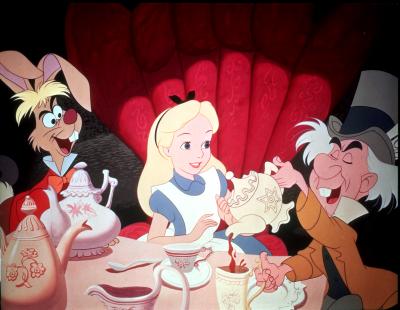
BRAND: Yahoo==Alice in Wonderland, a little lost

The web 1.0 leader worries about survival as a stand-alone property. Wall Street cares about growth and Yahoo has lost market share during the web 2.0 resurgence.


The Semel-years led Yahoo toward better financial management, but poor strategic thinking. Rather than investing in the infrastructure of people, platforms, and innovation - the company moved toward content and services - a dead-end that competes with millions of media partners - and a goal where it's impossible dominate the world of opinions

Post-Semel, the company has had too many ideas. 360, AMP, Broadcast, Buzz, Del.icio.us, Geocities, Jajah, My Bookmark, MyBlogLog, Shine, Yahoo Auctions, Yahoo Directory, Yahoo Music, Yahoo! Open Strategy, Yahoo Pipes, YPN, Yahoo Video, Yahooligans - too many me-too projects, too little results.  

What's next? 370? Shinola? Twitt-oo?


Web 2.0 is not a tea party - it's a war. Choose your fronts and remember to win.

PS: Microsoft has lost interest in Yahoo. Will Yahoo be distracted by shareholder politics? Will the stock price tank? Will strategic partners question Yahoo's credibility? Difficult times for Yahoo ahead - they need a win.

Who Is Buying Yahoo Shares Today?

...Mr. Yang boasted of the company’s first-quarter results, which were slightly ahead of analysts’ expectations, and its recent crop of “innovative products and services that really move the needle and make a difference for our users and customers”:

Acquiring Maven Networks. Launching BuzzOneSearch 2.0, voice-activated mobile searchvideo on FlickrShine. Previewing AMP! from Yahoo! and SearchMonkey. Addingmore Newspaper Consortium members. Establishing our New R&D labs in India and Israel.

SearchMonkey—a method to open Yahoo’s search engine to outsiders—is interesting. The AMP! Platform and Newspaper Consortium represent anemerging strategy to build out Yahoo’s display advertising business...


May 1, 2008

NEWS: Media execs size up video's future on the Web

Media execs size up video's future on the Web

LOS ANGELES--Video may be the next content revolution on the Internet after text and photos, but it's still unclear how to sell it best to advertisers and Web surfers. And that's even for a Google executive.
"The challenge in the future of video is how to find video...and maintaining that sense of discovery," said Jordan Hoffner, head of content partnerships at YouTube, which is owned by Google. "Sharing and tagging video is a start."
Hoffner was speaking on a panel here Tuesday at the Economics of Social Media 2008 conference, along with executives from online media outfits FastCompany.TV, Seesmic, Revision3, and Veoh Networks.

Later in the morning on a separate panel, an executive from MTV, whose parent company Viacom is suing Google for copyright infringement, mirrored Hoffner's sentiments, saying it can be difficult to help people find relevant video among archives on sites like Comedy Central, for example. That's why MTV is tagging video in a way that helps build a recommendation system, according to Erik Flannigan, digital media vice president at MTV.

As to the question of making money from video, Hoffner said he couldn't predict how successful Google's new advertising service for video would be. But he highlighted an inherent challenge for media companies when it comes to video advertising online. With major TV networks, advertisers have a sense of scarcity in inventory, and that drives pricing up. But online, they have thousands of choices to advertise, and that produces the opposite effect.

YouTube also must cherry pick among its user-generated videos for the content that's legal (for instance, it doesn't use a copyrighted music clip) as well as popular among visitors.

"The format is great for users, but I'm not sure it's great for advertisers," Hoffner said.

When it comes to editorially produced video, the picture gets clearer--at least for the executives behind new ventures like Revision3.

Jim Louderback, CEO of the Internet TV network, is bullish about online video advertising. He said his company is building smaller, but loyal, audiences for its online programming, including shows like Diggnation and GigaOm.

Rather than focusing on building a "hit" show with millions of viewers in the broadcast model, Louderback said he's happy with a bunch of shows that have half a million people watching online regularly. Advertisers are willing to pay as much as $80 per thousand impressions (CPM) to reach those loyal audiences, he said. (In contrast, ads on social networks can run at about 20 cents per CPM.)

Revision3 also produces programming at a 10th the cost of what traditional broadcasters spend, he said. "This new model is viable," Louderback said.

Hoffner echoed that sentiment by giving an example of what the Associated Press has done with video. He said that the AP has posted tons of video online--and each of its clips gets roughly a few thousand views. Rolled up together, however, the advertising dollars amount to a "nice chunk of change for them," he said.

Robert Scoble, managing director of FastCompany.TV, said that his technology-focused show has a following of about 80,000 people, and he hasn't had a problem attracting advertisers. Seagate sponsors his show to the tune of seven figures, Scoble said.

"It's a Homestead Act for video...it's untapped for so many niche areas."

Ed: Branding is missing at Youtube.


Apr 29, 2008

BRAND: Google==Don't Be Evil, 'picture is worth a thousand words'

Ed: A picture is worth a thousand words.

Google: Okay To Be Evil Sometimes

by 

marissamayerbig.jpgIs Google done with its famous motto, "Don't be evil?" TechCrunch's Michel Arrington cites remarks by Google star Marissa Mayer in Australia that suggest that even Google is getting sick of this albatross:

Last week, however, Google's Marissa Mayer said 'It really wasn't like an elected, ordained motto' during an interview in Australia, adding 'I think that Don't Be Evil' is a very easy thing to point at when you see Google doing something that you personally don't like; it's a very easy thing to point out so it does get targeted a lot.'

Ed: Maybe two pictures...

BRAND: Take Two, Google==Beauty and the Geek(s)

The CW reveals 'Beauty and the Geek' fifth-season cast and twist

By Christopher Rocchio, 02/20/2008

;-)

Photos

Beauty and the Geek 5 Gallery
From a poet to a Playboy bunny, there's quite a variety in this batch. Meet the guys and gals ofBeauty and the Geek!


Beauties and Geeks Like You and Me
Fans of Beauty and the Geek submitted their photos and told us what makes them a Beauty or a Geek.

Apr 27, 2008

Are you a Googler, Yahoo, or Live-r? Branding Lessons By Battelle and Others

Are you a Googler, Yahoo, or Live-r?  

When I buy advertising with the WSJ, Vogue, NYT, or Sunset magazine, a clear demographic is implied by the premium brand. The halo effect is positive on my brand.

Every US adult and teen touches the services of Google, Yahoo, and Microsoft - every month. There is no brand halo effect. Do users identify themselves with the portal brands? Are they a fan or just an anonymous user? Portals have a problem.

Portals have become the new mass media - as unbranded as the US Postal Office. They are simply  cheaper and more efficient;-)

Are Blogs Premium Brands

What about blogs? Techcrunch reaches millions per month. When I discussed with my brother-in-law, he asked, "what is Techcrunch?" Silicon Alley Insider is Henry Bloget, not SAI. Same branding problem exists for Glam. The many top 100 lists for blogs are filled with unrecognized names. None of their virtual readers are easily characterized. Who are they? 

In contrast, my brother-in-law knows Computerworld, Infoworld, PC World, PC Magazine, and Motorbike Today and has a clear sense of their audience. Legacy publishers have a branding advantage and blogs have a problem. 

Maybe it's time for Techcrunch or Federated Media to BUY advertising to build brand recognition.


March 16, 2008 8:46 PM

What's This Fascination with Ad Networks? (Or, the Online Media Business Will Be About Brands First, Technology Second)
Back a year ago, I wrote a three part series on the future of the media business. It began as an attempt to think out loud about a topic with which I had become obsessed, and it ended up becoming a manifesto of sorts aboutconversational media and marketing.

The Rise of Independent Media Brands Online

And I have to tell you, neither the publishers nor the brand marketers believe that a magical ad platform will somehow address their needs online. Sure, brand marketers will spend 5-15% of their budget on lower-CPM "pray and spray" DR and awareness campaigns. And sure, publishers are happy - thrilled! - to see algorithms drive up their backfill or remnant inventory CPMs. But none of them believe that ad networks provide the same kind of engagement and brand building opportunities that a simple two-page spread or 30-second spot does in the offline world.

So what *are* their needs? To address that, we need to step back, and think about media brands and marketing brands, and why there's such a symbiotic relationship between the two. Clearly, brands have built what I've called "packaged goods media." And in the past few years, I've come to the same conclusion about online media. In short, I think brands will also build the next batch of great online media companies. And up until recently, I thought Yahoo, AOL, and MSN were best positioned to be those companies. Now, I'm not so sure...


So Where Are We Today?

As has been reported widely, more than 80 percent of the advertising inventory on the Web today is sold for less than a $1 CPM. Compare that to the average sold CPM in the magazine business or on television - reports vary, but it's anywhere from six to 40 times higher. That delta, to my mind, has everything to do with engagement.

Or put another way, why is it that a brand marketer looking to reach college educated women, 18-34, is willing to pay $40 CPMs in Vanity Fair, but just $3 in an ad network?

The first and most important reason is engagement - the reader of Vanity Fair is engaged in the magazine, and when she comes across that Lancome ad, the chances that the "between the ears magic" will occur is far greater than at a random site run by an ad network. The second and related reason is creative - a two-page spread is simply a far more effective media vehicle for the brand's message than the IAB unit.

So how do we solve for these two problems on the web?

Well, with Conversational Media, I believe the Web already begun to solve for the first issue. ..

But to do so, we need to solve the second issue - which is creative. And that's where I think conversational marketing comes in.

In my third post in this three part series (yes, this is the end of the second, congratulations, you made it!), ...

The "Hidden Return" Of Online Advertising

We all know that online advertising benefits from being measurable and that it's returns are often better than offline advertising. But the one thing we have not been able to measure is the offline impact of online advertising. I have frequently cited a comscore study from years ago that showed that >80% of transactions initiated with online search were transacted offline.

Now we have a new study from comscore, which is outlined in the Harvard Business Review. It's even better than that.

A recent study we conducted for a retailer with more than $15 billion in annual revenues—the vast majority of which come from its physical stores—had notable results. Over a three-month period, U.S. sales increased by 40% online and by 50% off-line among people exposed to an online search- and display-ad holiday campaign promoting the entire company. Because its baseline sales volumes are greater in physical stores than on the internet, this retailer derived a great deal more revenue benefit off-line than the percentages suggest. Even in terms of raw increases, though, online ads had a bigger impact on off-line than on online sales in a majority of our studies.

So when you buy advertising online that is generating a positive ROI just based on online conversion, you are likely to be getting an even better ROI that you think you are. It would be great to have some kind of closed loop tracking of the offline purchase activity. Maybe with mobile payments, we can get there.

Look Who's Buying "Brand Advertising" Keyword!

What do you know about that. Brand Advertising on Google:

Brand Ads On Google

It's Google, the master of direct response, neck in neck with Facebook. Innaresting. Thanks, Shank-mon!

The New Yahoo: Sticky, Viral, And Most Of All, Friendly

Yahoo’s CTO Ari Balogh and Chief Architect (Platforms) Neal Sample filled in a few more details today around their new Yahoo Open Strategy (called YOS internally).

Background

Yahoo wants to turn itself into one big social network-driven site, and simultaneously open many of its core services to get users and developers thinking of Yahoo as their Internet hub. They’ve been talking about parts of this since last November. First were details about how webmail will serve as the social networking hub, followed by more tidbits in January. In March they joined the Google-led Open Social initiative. And they’ve made a series of announcements around Search Monkey which will allow third parties to enhance Yahoo search with structured data.

Yahoo Open Strategy

Yahoo mashes the social stuff and the open stuff under the same banner of YOS. There are three components to the additional news announced today - platformization, opening services, and portability. It’s important to note that nothing has launched, and there’s no public timetable for the launch of any particular part of YOS. Sample said in a briefing today that the pieces will be released over the coming months...

Google wants to turn your home page into your social network

Social networks like Facebook and MySpace are often just one click of a bookmark away on users’ web browsers. Google looks to be one-upping them by turning its personalized home page, iGoogle, into a social network of sorts.

With the new developer sandbox for iGoogle, Google is offering hints of what could be a very grand scheme. The video Google has released (embedded below) is front-loaded with what seems to be routine updates for what developers can do with iGoogle. However, towards the end we’re hit with code for accessing friends’ data and yes, creating an all important (in this day and age of social networks), friends’ activity stream.


Support Our Sponsors: